We continue with minority languages today, but since it is the Second Sunday of Advent (将临期第二主日 or 降临第二主日) we bring out a major work, Ivan Ilyich Zakharov’s (Иван Ильич Захаров 1816-1885) Complete Manchu-Russian Dictionary (Полный Маньчжурско-Русскій Словарь), originally published 1875 in Saint Petersburg, but our copy is the 1939 Peking edition. Zakharov was a Russian diplomat, working in the Peking Orthodox Mission 1839-1850. He assisted with the 1851 Treaty of Kulja (Ghulja غۇلجا, Yining 伊宁, in Ili Prefecture 伊犁) 中俄伊犁塔爾巴哈臺通商章程 which opened for border trade. Zakharov later became a professor of Manchu studies at Saint Petersburg Imperial University (now Saint Petersburg State University).
Zakharov’s dictionary was one of the first Manchu dictionaries available to a Western audience. Manchu studies declined as its own field after the fall of the Qing dynasty, but has seen a revival in recent years as knowledge of Manchu language is relevant for Qing historical studies. Manchu studies never really developed in Sweden, but thanks to maybe Bernhard Karlgren (although he left Gothenburg in 1939 when this book was published), or more likely one of his students we own a copy. The National Library of Sweden does not have the Complete Manchu-Russian Dictionary, but copies are kept at British Library, Bibliothèque nationale de France and Staatsbibliothek zu Berlin among a handful other libraries in Europe. If you want to learn more about Manchu I suggest to contact the Manchu Studies Group. Manchu is only spoken as first language by a handful of people today, but thousands have been learning it as a second or third language in China in recent years.
The theme for this ”calendar” was supposed to be ”China books”, so why choose a Mongolian book today? Well, Mongolian is one of the larger minority languages in China, and this book is written and published by Angcinku̇u̇ 安柯钦夫 (1929-2013), a Mongolian author from Ulanhad (Chifeng 赤峰, earlier known as Ju Ud League 昭乌达盟) in Inner Mongolia. Angcinku̇u̇ was a CPC member and held high positions in the Chinese Writers Association 中国作家协会. He seems to have mostly written short stories, and the book of the day is a short story collection, 北国新姿 in Chinese or ”Northern New Look” in my approximate translation. It was published in 1963 and how it ended up in our collection in Gothenburg is not quite clear, but I suspect my predecessors at the University of Gothenburg, Olov Bertil Anderson (1920-1993) or Tor Ulving (1916-2014), both polyglots. Ulving knew dozens of languages, and he compiled his own ”Lhasa-Swedish” (Tibetan-Swedish) dictionary, never published but with its original index card word collection still kept at the department.
I cannot say much about the content of the book as I don’t know Mongolian, but the short details in Chinese do tell us a few interesting things. The translator Ding Erjia 丁尔甲 is difficult to trace, but I have found out that he or she must have been one of the more important translators from Mongolian to Chinese in the 1960s and 1970s. For example, in 1976 Ding Erjia translated the 18th century Chinese classic 红楼梦 Dream of the Red Chamberinto Mongolian together with a handful other translators.
The street name of the publisher is also interesting, Xiluofengjie 西落凤街 in Hohhot 呼和浩特. This is the street where the Empress Dowager Cixi 慈禧 (1839-1908) spent some of her teenage years. Cixi was born in Beijing, but followed her father Huizheng 惠征 when he was transferred to serve as military magistrate 兵备道 in what was then Guisui 归绥. So much from a random Mongolian book in Gothenburg – and I found that it sells for 200 yuan RMB on Chinese antiquarian book site 孔夫子旧书网…
Author A. R. Colquhoun and Qing general and diplomat Li Hongzhang 李鴻章 ”discussing affairs”…
The image above is intriguing, and one really wonders what ”affairs” the two gentlemen were discussing. Archibald Ross Colquhoun 柯樂洪 (1848-1914) was a British explorer who was also the first Administrator of Southern Rhodesia (current Zimbabwe) 1890-1894. After this he returned to the UK, but in the second half of the 1890s travelled to Asia, and became The Times correspondent in China, travelling extensively around the country. He wrote several books about China and travelling in Asia, one of them the book of the day, China in Transformation, first edition 1898. Li Hongzhang (1823-1901) was a towering figure in late Qing China, being central for stopping the Taiping Rebellion, holding high level posts in the Qing government, and just before his death signing the Boxer Protocol. Li toured Russia, Europe and North America in 1896.
Besides the value and interest of the book as such, it has also had an interesting owner. The book is autographed by Helmer Key (1864-1939), who was a Swedish literary scholar and also the editor-in-chief of Svenska Dagbladet (1897-1934), the leading conservative newspaper in Sweden. Key was also the chair of the Swedish Publicists’ Association 1917-1920. Helmer Key had an interest in international affairs, likely with a colonial perspective, and published a longer article in 1900 called ”China and its commercial future” (”Kina och dess kommersiella framtid”). Most likely Colquhoun’s book was one of his major sources. Helmer Key was related to the feminist author and educationalist Ellen Key, and he was also the model for the character ”Dr Doncker” in Hjalmar Söderberg’s novel The Serious Game (Den allvarsamma leken).
China map from R M Martin’s China, Political, Commercial, and Social (1847)
Xi Jinping in his third term as party leader, massive covid protests, the recent death of Jiang Zemin… so much happening in China – and I make a ”Christmas calendar” about old books? Well, why not? Every day at work I walk past our department collection of China related books, and there are so many intriguing objects there. Physical books are today too often seen as only taking up space, gathering dust and so on, but only in our small collection at the Department of Languages and Literatures in Gothenburg you can find many both valuable and fascinating volumes. I have randomly chosen 24 books to present here until Christmas, just for fun.
Today, 1 December 2022, I have chosen Robert Montgomery Martin’s (1801-1868) China, Political, Commercial, and Social in two volumes, first edition from 1847. Martin was born in Dublin and in his twenties travelled to Ceylon, South Africa, and Madagascar, and also stayed over a year in Australia. Back in England he became a writer, taking an interest in colonial affairs, and was a founding member of The Royal Statistical Society in 1834. The same year Martin published the major work The History of the British Colonies in five volumes, in 1837 expanded to ten volumes. In 1844 he was appointed as the first Colonial Treasurer 庫務司 of Hong Kong. He resigned already in 1845 after a conflict with the governor Sir John Francis Davis about opium revenues, and returned to England. In today’s book China, Political, Commercial, and Social there is a section on opium that was also published separately. Apparently Martin in his reports as Colonial Treasurer argued that Hong Kong as a colony was ”doomed to failure”.
Martin is not very well-known today, but the maps from these two volumes sometimes appear on the market, and the complete book in good condition is quite sought after. The full text of the two volumes is available online.
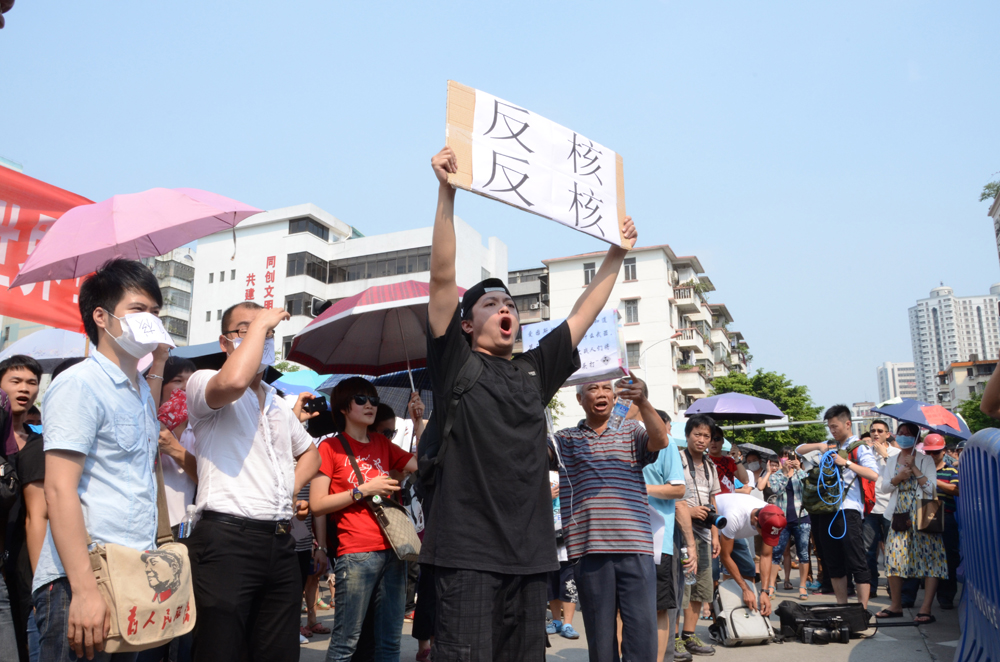
Every day hundreds of protests occur all around China, often with regard to land disputes, unpaid wages, pollution or corruption. The last few days have seen a protest of slightly different kind take place in Jiangmen (江门) in Guangdong province. At least it had a different motive. The form was the usual in recent years, namely ”taking a walk” (散步), which in reality is a demonstration, but named so to avoid the prohibitions on unauthorized gatherings. Even official Chinese media used this term for the protests in Jiangmen.
Protesters in Jiangmen hold up signs saying ”against nuclear [power]”反核What they protested against? A nuclear fuel processing plant (核燃料加工厂). Some Western media have called it NIMBY protests (Not In My BackYard), and maybe that is some of the truth. From some available reports it seems that the protests were mostly against the location of the plant, not totally against nuclear power as such. It is still very unusual, especially since they managed to get the government of Jiangmen to reverse their decision and not give permission for the plant. There were also some protests against plans for a plant in Pengze (彭泽), Jiangxi province, in 2012, however centred in the nearby town Wangjiang (望江), in Anhui province across the Yangzi River (扬子江).
China first started planning for civilian nuclear power plants in the 1970s, but not until 1991 was the first plant finished and connected to the grid, Qinshan in Haiyan County, Zhejiang (浙江省海盐县秦山), undoubtedly delayed by the Chernobyl disaster. The Daya Bay plant near Shenzhen started production in 1993 and provides around 20% of the power for Hong Kong. There are altogether 17 reactors working in China, at four sites, with another 28 under construction. Most of them are along the coast, with Xianning (咸宁) in inland Hubei province (湖北) (under construction) being one of the exceptions.
Chinese officials have claimed that there will not be a ”great leap forward” (大跃进) in building nuclear power in China. That may sound reassuring, but just a few days before the Jiangmen protests the IAEA director general, Yukiya Amano (天野之弥), said that ”China is at the center of the nuclear energy expansion in Asia”. What if protests grow stronger? What if no Chinese want nuclear power in their ”backyard”? And where to put the nuclear waste?
China is also ”at the center” for solar energy and wind power technology, and has plans for addition of 10 GW of solar power capacity to the grid annually in the coming three years, as well as 100 GW of connected wind power to 2015. What if China would take the lead in alternative energy and stop developing nuclear power? That would indeed be a great leap forward.
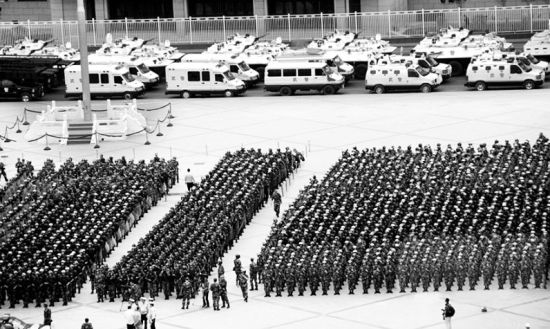
After the bloody incident near Turpan a few days ago things have escalated. The death toll has risen, and other violence has been reported from Hotan (和田). The response from the authorities have been to show strength, most obviously by arranging ”pledge meetings to fight terrorism and keep stability” (反恐维稳誓师大会) of the People’s Armed Police force (人民武装警察部队) in Urumqi, Kashgar, Ghulja (固勒扎, also known as Ili 伊犁 or Yining 伊宁), Hotan and Aksu (video here). These forces now also patrol Urumqi and other cities. Some reports also tell of disturbances in Internet traffic.
”Pledge meeting” in Urumqi. It is notable that many vehicles are European Ivecos or American Fords. How does that go along with the arms embargo?
Yu Zhengsheng (俞正声) came to Urumqi 29 June to hold a ”meeting for party and state cadres” of the whole region (全区党政干部大会), transmitting directives from Xi Jinping and the special meeting held by the politbureau standing committee in Beijing the day before. Meng Jianzhu (孟建柱), secretary of the Central Politics and Law Commission (中央政法委员会) arrived in Urumqi to speak at the ”pledge meeting”, and the MInister of Public Security, Guo Shengkun (郭声琨) also took part.
Besides this not so subtle show of force and determination, other simultaneous events provide unintentional (?) irony to the whole situation. On 29 June Urumqi was also the place for the 10th International Symposium on Disaster History (第十届中国灾害史国际学术会议), with the theme ”Disaster and Frontier Society” (灾害与边疆社会). The symposium apparently mostly dealt with natural disasters as floods, earthquakes and draughts, but it is impossible not to think of political and social disasters, killings and ”the 5 July incident” (七五事件) 2009.
To further add to the confusion a top news item on the Kashgar Prefecture government website these days is the upcoming completion at the end of 2013 of the ”Disney of Xinjiang” (新疆迪斯尼) in Shufu county (疏附县 Kona Sheher, meaning ”old city”), Kashgar, namely the Ependi Amusement Park (阿凡提乐园). With a total investment of 200 million yuan (c. 25 million Euro) this theme park will hold an ”Ependi grand bazaar” (阿凡提大巴扎), a culture square (文化广场), ”Ependi ethnic village” (阿凡提民俗村), a great Ependi sculpture (阿凡提大型雕塑), reliefs (浮雕), a culture wall (文化墙) and ”Adil dawaz performance centre” (阿迪力达瓦孜演艺中心). Adil Hoshur (阿迪力·吾休尔, b. 1971) is a world renowned tightrope walker. Basically more ”singing and dancing”…
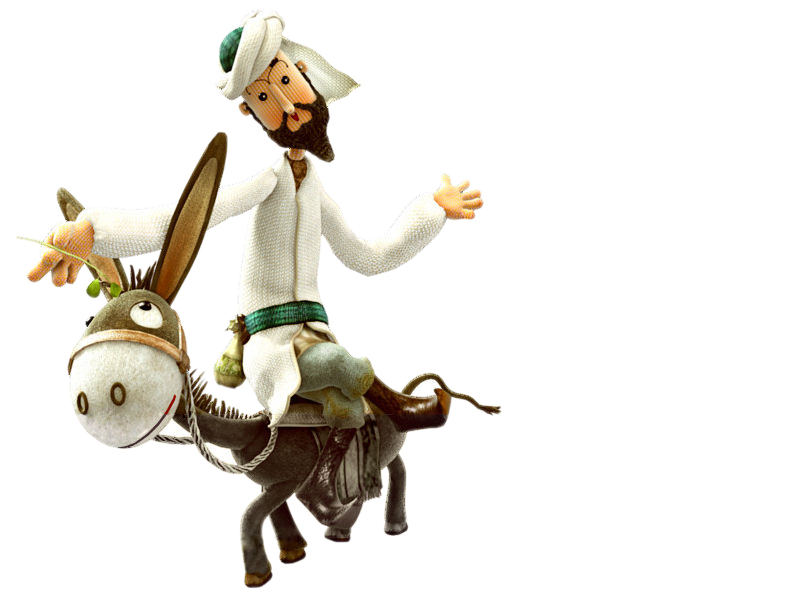
Image of Ependi from the 1980 film
But who was Nasreddin ependi? He might have been a Seljuq sufi from Konya in present-day Turkey, living in the 13th century. He might also just be made up. There are thousands of stories about him, sometimes with him as a witty or wise man, sometimes as a fool. Nasreddin is claimed by many Turkic peoples, and among Uyghurs he is known mostly by his courtesy title, Ependi (阿凡提). In the 1980s an very popular animated film was made in China, titled ”The Story of Ependi” (阿凡提的故事). Despite being appropriated and modulated into an ethnic sterotype, and despite calls to make him a ”image ambassador” (形象大使) for Xinjiang, Ependi’s wit is of the kind that could function as a safety valve and also bring hope in a seemingly hopeless situation.
Yesterday morning (26 June) another tragic and violent incident happened in Xinjiang, this time in Lukqun township, Pichan (Shanshan) county, close to Turpan (新疆吐鲁番鄯善县鲁克沁镇). 27 people died, according to official sources 17 people (including nine policmen) killed by local ”knife-wielding mobs” (all Uyghur), and then the police shot and killed ten people from these mobs. The PRC state news agency Xinhua only published this news in a brief English statement. Nothing in any Chinese language media inside the PRC. Interestingly the People’s Daily affiliate Global Times later came with a longer piece, quoting reporting by the Hong Kong newspaper Ta Kung Pao (大公報)! Usually only Xinhua reporting is allowed, most likely meaning that Ta Kung Pao, a ”Beijing-friendly” newspaper (claimed to be party funded), was used to show the exception to the rule.
It is notable that the word terrorism was not used in the first official reports. Global Times, however, added this, and this has been the theme in most similar incidents. In late April this year there was another clash in Maralbexi (Bachu 巴楚) outside Kashgar (喀什噶尔 or 喀什) where 21 were killed, 15 of them policemen. This was claimed by authorities as ”planning for terrorist attacks”. Notably, in all recent incidents of this kind the perpetrators have been using large knives, not explosives or guns. The authorities never seem to consider it to be ”merely” criminal groups, without any political or terrorist goals. The incident yesterday might actually be related to an incident in a neighbouring village 9 April, where a young Uyghur boy was brutally killed by a Han Chinese man. Revenge by devastated relatives, spurred on by longtime frustration and inability to control and change one’s own situation?
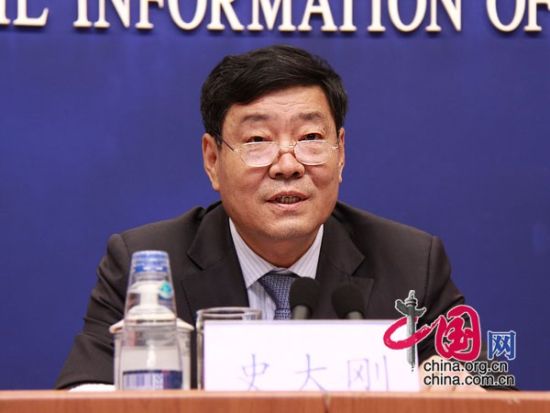
Vice governor of Xinjiang, Shi Dagang 新疆自治区副主席史大刚
One should perhaps not speculate, but certainly one must condemn such acts of violence. With the propaganda situation in China facts are always distorted, sometimes to the degree that one doesn’t know what to say or think. A friend made me aware of a Reuters report saying ”Xinjiang minorities too busy dancing to make trouble”, apparently a comment made by Xinjiang vice governor Shi Dagang (史大刚) 28 May. The original Chinese reporting reveals even more of his peculiar comments. Shi Dagang also claimed that ”there is always a mutual respect between our Han cadres and locals of all nationalities, and they are all good friends” (我们的汉族干部和当地的各民族之间相互非常尊重、相互都是好朋友). I still remember clearly my first visit to Xinjiang in 1998 where one of my hosts, a local Uyghur government cadre, had a Han driver and several Han subordinates. They were all courteous towards him during work time, but apparently they had never met after work hours, and they lived in separate compounds far away from each other.
Governor Shi also claims that ”every time we are guests in ethnic minority homes, we are treated with good meat and wine, they sing and dance; ethnic minorities are very simple and kind in such matters, generous and passionately hospitable” (我们到少数民族家里作客,好肉好酒的招待,跳着舞唱着歌,少数民族这种情感非常淳朴、非常善良、非常热情、非常大方,真的是热情好客). Who would not do his best to entertain a visiting governor?
Stereotypes about dancing, singing, friendliness and hospitality are merely one of many ways of controlling non-majority culture in the PRC. It is not enough to cause violent clashes, but is one of the factors underlying the ever growing tensions. Next week is the 4th anniversary of the ”5 July incident” 2009, where almost 200 people were killed in Urumqi (乌鲁木齐). This year it happens to come just before Ramadan (斋月), which starts 9 July.
The last (latest?) imperial dynasty that ruled what we call China today, was the Qing (清朝 1644-1911), founded by the Aisin Gioro (爱新觉罗) family of the Gioro clan. Around the time of the founding the Qing empire 1644 this clan had united several other clans and the notion of a united Manchu people (满族) became stronger. Towards the end of their reign the Manchu language was less spoken and today only few native speakers remain. However, there has been an increasing interest in recent years, and it is again being taught in some schools in northeastern China. There are also close relatives in what is now called the Sibe (Xibo 锡伯) ethnic group, living primarily in Xinjiang.
During the Qing dynasty the Manchu rulers imposed the so called queue (辫子) on the Chinese population, that is the style to shave the hair on the forehead and bind the rest into a long queue. During the Xinhai Revolution (辛亥革命) in 1911 many Chinese were rather harsh on the Manchus, and one common banner during the fighting said ”promote Han, eliminate Manchu” (兴汉灭满). Negative images of Manchus also spread into Western popular culture, possibly the most bizarre example being the evil Dr. Fu Manchu (傅满洲). Several Hollywood movies were made in the 1920-30s where Fu Manchu was portrayed by the Swedish-American (!) actor Warner Oland (1879-1938), most known for his role as the Chinese American detective Charlie Chan (陈查理).
Werner Oland as Fu Manchu
After the establishment of the Republic of China, Sun Zhongshan (孙中山 Sun Yat-sen 孙逸仙) and other Han Chinese leaders often talked about ”the Chinese nation” (中华民族), meaning all major ethnic groups within the state borders, trying to create a common ground and belonging. This expression has become increasingly popular again in recent years, especially after tensions in Tibet and Xinjiang. In the eyes of the PRC party-state a well-adapted ethnic minority person should first think of him- or herself as a PRC citizen, then as belonging to his own ethnic group, and then further on the scale of various identities.
First Manchu astronaut Zhang Xiaoguang!
Manchus are not among the most prominent ethnic groups in contemporary China, although being one of the largest. They do not belong to a specific religion, and therefore usually do not get any ceremonial posts as Uyghurs or Tibetans do. They are rather invisible in contemporary society. However, 11 June 2013, the first Manchu astronaut launched into space from Jiuquan Satellite Launch Center on Shenzhou 10, the fourth manned Chinese space expedition. The space craft will land within hours of the publication of this blog, early morning Beijing time 26 June 2013. The official biography of senior colonel (大校) Zhang Xiaoguang (张晓光, b. 1966) mentions his Manchu ethnicity, but there seems to be very little focus on this first for the Manchu people. However, in an interview with China National Radio (中央人民广播电台 ”Central People’s Radio”), one of the more typical stereotypes of ethnic minorities in China suddenly pops up. The reporter says: ”only after a few sentences, one could clearly feel the simple, unadorned and sincere character of this Manchu fellow” (短短几句话,就让人真切地感受到了这位满族汉子的质朴和真诚). Would the same have been written about the Han astronauts?
In 2002 I published an article about Liu Xiaofeng (刘小枫) in the magazine 书城 (Book Town), and they cut one or two sentences where I had mentioned Liu Xiaobo (刘晓波), without notifying me in advance. That was the only experience I had personally of Chinese censorship, until now.
Towards the end of 2012 I attended a conference in China and presented a paper on religion as a factor for building ”harmonious society”, also making comparisons with the Nordic revival movements and building a democratic ”harmonious” welfare society (福利社会) in Sweden. Just at the end of the year a journal affiliated to the university arranging the conference sent me an e-mail saying in English that they had selected mine and a few other articles for publication. It is a good Chinese journal, listed with Chinese Social Sciences Citation Index (CSSCI 中文社会科学引文索引), and with international ambitions, so I was glad to hear they liked my article. I worked on it for some time and then submitted again.
Just over a week ago I received an e-mail from the same editorial department, in Chinese, and only signed ”the editorial department”. The subject was ”return of manuscript” (退稿), and the main content was that mine and a few other articles ”cannot quite agree with the requirements of the journal” (不是很能契合学刊的要求). First I was very puzzled, but then I realized that I had been censored (审查). Not just a few lines here and there, but the whole article.
I wrote directly to the editors, expressed my surprise and asked for an explanation. No answer came. I wrote again, a second and a third time, and only then there was an answer, ten days after the original e-mail. This was an actual apology, and even an explanation of the pressure they had got not to publish mine and a few other articles as they were ”too sensitive”. Who was giving pressure? I don’t know. Maybe there was no one, but merely self-censorship. It is very discomforting and disturbing to experience such a thing from persons you know and trust.
Having studied China for more than 20 years I know that such things, unfortunately, are everyday matters (!) in China, and I have heard friends telling me many stories about it. But how to deal with it as a non-Chinese researcher? I cannot censor myself. Should I not publish in Chinese journals? I think that an ”as if” stance like the one taken by Geremie R. Barmé and the Australian Centre on China in the World can be the answer:
…to act as if the People’s Republic had already sloughed off the vestiges of Cold War-era and Maoist attitudes, behaviour and language. We engage with the People’s Republic as if it enjoyed an environment like that of any other mature, open and equitable society.
New years usually come with promises, expectations and hope for a brighter future. The first days of 2013 has proved rather an exception, at least here in China.
Protester in Guangzhou with mouth cover saying ”prevent speech cover” (避言套), a pun with 避孕套 (condom), only changing the middle character…
On New Year’s Eve another outspoken magazine, Yanhuang chunqiu (炎黄春秋), was notified that its website would close, which it did in the morning 4 January. The editorial department continuously comments and updates on its Weibo. The print version seems to be unaffected this far, but such a closure is not a good sign.
Are such acts sign of the ”four new modernizations” (新四化) that CPC no. 2, Li Keqiang, likely the next Chinese premier, has been talking about during the autumn 2012? One of these ”new” modernizations is ”application of information technology” (”IT-ization”) (信息化), and it seems that this ”application” is not beneficial to freedom of speech, but rather the contrary.
While brave people stand up for their rights in Guangzhou, supporting Southern Weekly, Liu Xiaobo’s wife, Liu Xia (刘霞), sits isolated in house arrest in their flat in Beijing. She has been there more than two years now, just for being Liu Xiaobo’s wife. 6 December 2012 some reporters from Associated Press (AP 美联社) managed to pass the guards and make a short interview with her, and crying she described the absurd life she is forced to live. On 28 December 2012, Liu Xiaobo’s birthday, a group of her friends, including Hu Jia (胡佳), Xu Youyu (徐友渔) and Liu Di (刘荻), also managed to enter her flat and talk to her. How come Liu Xia is not a major cause for concern and action outside China? Her house arrest is surely not legal even by PRC standards, and the emotional pressure on her must be enormous. One cannot but think of Wei Jingsheng’s (魏京生) proposal for a ”fifth modernization” in 1978, namely democratization. 35 years later it is still valid.